
Rewire Brain After Porn: Timeline & Tips
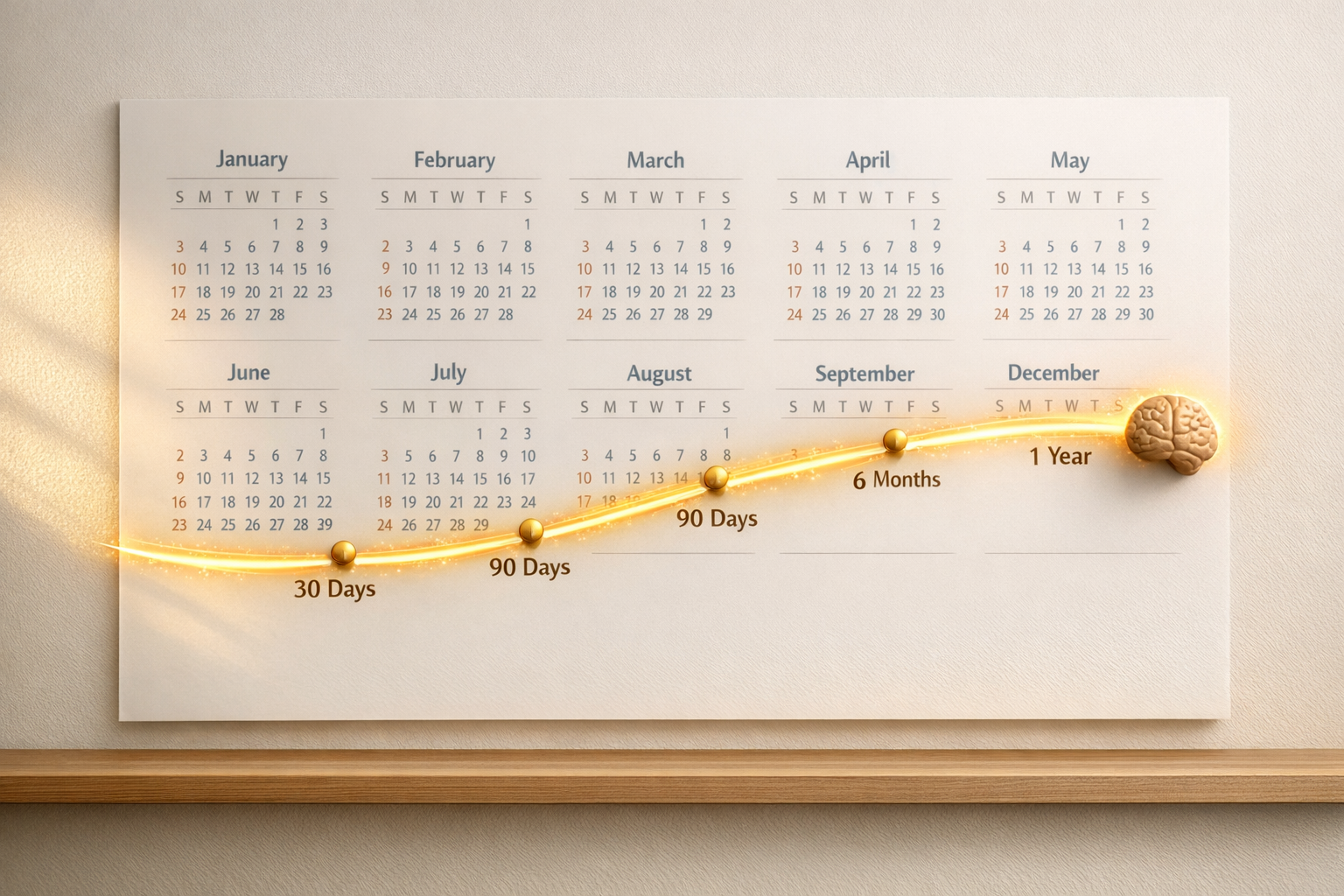
Quitting porn doesn’t lead to instant brain recovery. Rewiring your brain takes time, effort, and consistency. Here’s the short answer: noticeable changes often begin around 90 days, but full recovery can take 6 months to 5 years, depending on usage history, age, and lifestyle.
Key milestones include:
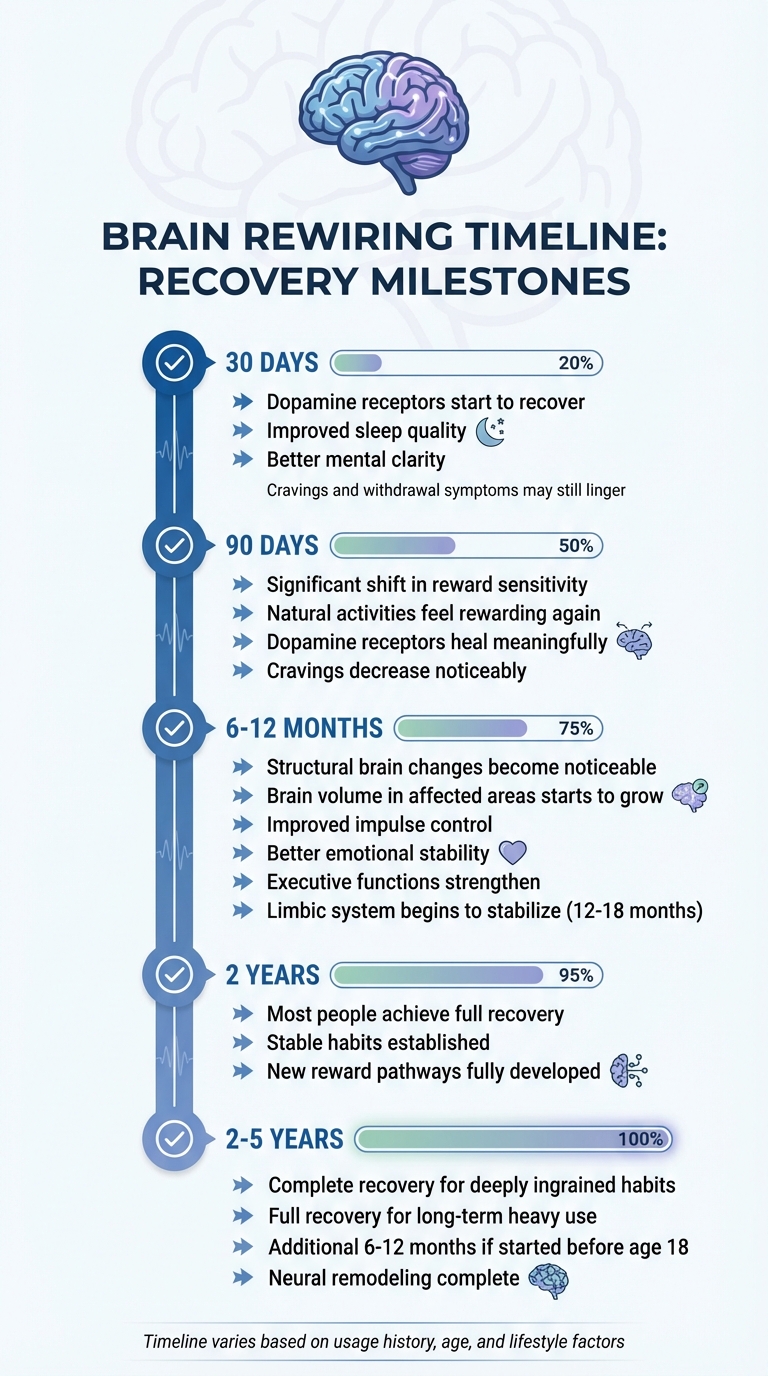
- 30 Days: Improved sleep and mental clarity as dopamine receptors start healing.
- 90 Days: Everyday activities feel rewarding again; cravings decrease.
- 6–12 Months: Structural brain changes improve decision-making and emotional stability.
- 2–5 Years: Full recovery for deeply ingrained habits or long-term use.
Factors like exercise, proper sleep, and stress management can speed up the process, while heavy use or starting young may extend timelines. Withdrawal symptoms, like cravings and irritability, are common early on but lessen over time. Patience and consistent effort are essential for lasting change.
From Pleasure to Pain: The Neuroscience of Porn Addiction Unraveled
How Long Does Brain Rewiring Take?
Rewiring the brain isn’t a quick process. While some people notice initial changes within 90 days, full recovery can take anywhere from 2 to 5 years [6]. This timeline reflects the extensive neural adjustments required to restore the brain's reward system and improve executive function.
Recovery happens in stages. During the first month, neurotransmitter levels begin to stabilize. Between 6 and 12 months, significant changes occur in areas of the brain responsible for decision-making and self-control. Meanwhile, the limbic system, which handles emotional responses, may take 12 to 18 months to stabilize [4][6]. For those with more severe or long-term addiction, neural remodeling can continue for up to five years [6].
Rewiring your brain from addiction is real, and it works. Research suggests meaningful neural shifts can happen in weeks, but full recovery takes months or years of consistent effort. - W. Lee Warren, M.D., Brain Surgeon and Author [7]
Let’s break down the key milestones that reflect progress during brain recovery.
Recovery Milestones: 30 Days, 90 Days, and Beyond
At 30 days, dopamine receptors start to recover, leading to better sleep and mental clarity [8][6]. While chemical balance begins to improve, cravings and withdrawal symptoms may still linger.
At 90 days, many report a significant shift - natural activities start to feel rewarding again [4]. This period is often the minimum needed for dopamine receptors to heal meaningfully [8][6].
Between 6 and 12 months, structural changes in the brain become noticeable. Brain volume in affected areas starts to grow, and executive functions like impulse control and emotional stability begin to improve [4][6]. Cravings lessen, but occasional bouts of anxiety or depression - known as Post-Acute Withdrawal Syndrome (PAWS) - can still occur as the stress response normalizes [6].
After 2 years or more, most people achieve full recovery and establish stable habits [1]. For individuals who started using pornography before age 18, recovery may take an additional 6 to 12 months due to ongoing brain development [6]. Those with heavy or daily use patterns often face longer timelines because of deeper neural imprints in critical brain regions [6]. Each stage builds upon the last, creating a gradual path toward long-term recovery.
To understand why the 90-day mark is so important, let’s look at the science behind it.
The Science Behind the 90-Day Benchmark
The 90-day milestone is backed by research showing it’s the minimum time needed for dopamine receptors to recover and for the prefrontal cortex - the brain’s hub for decision-making and impulse control - to regain enough function to handle complex emotions [8][5][6].
This process relies on neuroplasticity, the brain’s ability to reorganize and form new neural pathways [4][5]. Activities like physical exercise can speed up recovery by increasing Brain-Derived Neurotrophic Factor (BDNF) levels by as much as 200% [6]. Sleep is equally crucial, as it’s during rest that the brain repairs itself and clears out metabolic waste [4][7].
Rewiring the brain in recovery isn't just about breaking free from addiction - it's about reclaiming your life, restoring your mind, and creating a future built on strength and resilience. - Dr. Zoe Shaw, Psychotherapist and Author [7]
The recovery process often extends beyond 90 days because pornography disrupts the dopamine reward system on a deep level. Developing new, healthier reward pathways can take 2 to 3 years [6]. Additional factors like depression, trauma, or genetic predispositions can add another 12 to 18 months to the timeline [6]. For many, patience and consistent effort are key to achieving lasting change.
What Affects Your Rewiring Timeline?
The timeline for brain rewiring varies greatly and depends on several factors. These include the severity of addiction, individual brain development, and lifestyle choices.
How Addiction Severity and Usage History Matter
The frequency and intensity of porn use significantly influence recovery time. For instance, daily consumption engrains deeper "neural grooves" compared to occasional use, making it harder to overwrite these patterns [6]. Prolonged, heavy use alters the structure of critical brain regions like the prefrontal cortex and basal ganglia - areas tied to decision-making and reward processing [6].
Longer and heavier use typically means more extensive brain changes, requiring more time for recovery. - White River Academy [1]
Binge-watching habits also strain the extended amygdala, delaying emotional recovery by several months, typically between 3 to 6 [6]. Additionally, as the addiction progresses, it shifts from impulsive behavior (seeking pleasure) to compulsive behavior (avoiding withdrawal symptoms), indicating deeper brain changes and a more challenging recovery process [9].
Age and Brain Plasticity
Younger brains tend to rewire faster because they are naturally more adaptable. However, this same adaptability makes them more vulnerable to the effects of addiction. Since the prefrontal cortex - the area responsible for impulse control - doesn't fully mature until around age 25, those who start addictive behaviors before age 18 may face longer recovery periods [1][6].
Older adults, on the other hand, may experience slower rewiring due to reduced neuroplasticity and longer usage histories. However, they often benefit from more stable emotional regulation and cognitive skills, which can aid in recovery even if structural brain changes take more time [10][1].
Impact of Diet, Exercise, and Stress
Lifestyle choices heavily influence the speed of brain recovery. Daily habits can either accelerate or slow down the process. For example:
- Exercise boosts Brain-Derived Neurotrophic Factor (BDNF), a protein essential for neuroplasticity, by as much as 200%. It also helps stabilize dopamine levels, which is crucial for normalizing the brain's reward system [6][10][5].
- Proper nutrition and hydration are equally important. Lean proteins provide amino acids needed for neurotransmitter production, while dehydration can slow neural recovery by up to 20% [6].
- Sleep - 7 to 9 hours per night - is critical. During sleep, the brain's microglial cells clear out unused neural connections, making room for healthier pathways [12][6].
On the flip side, chronic stress can flood the brain with cortisol, disrupting neuroplasticity and significantly delaying recovery [6]. Mindfulness practices can help counteract this by strengthening the prefrontal cortex and improving emotional control [10][11].
Finally, a supportive environment can make a huge difference. A strong support system can speed up recovery by 20% to 30%, while toxic or high-stress environments may extend the process by several months - sometimes as long as 6 to 12 months [6].
What to Expect During Withdrawal and Recovery
Withdrawal and recovery unfold in distinct stages, each with its challenges. Understanding these phases can help you navigate the process more effectively. Here's an overview to prepare you for what's ahead and set the groundwork for strategies discussed later in this guide.
Week 1: Initial Withdrawal Symptoms
The first week marks a critical point in recovery as your brain begins to adjust to the absence of regular dopamine surges. This adjustment can trigger a range of symptoms, including intense cravings, irritability, anxiety, and mental fog. Physical symptoms like insomnia, fatigue, tension headaches, muscle aches, and digestive discomfort are also common.
The first phase of porn withdrawal often lasts one to two weeks and is usually the most intense. The brain is adjusting to the absence of habitual dopamine surges from porn. - Overcomer [13]
Symptoms often peak around the two-week mark before gradually subsiding. To help manage this phase, try practical approaches like taking cold showers, which can temporarily boost dopamine levels by up to 250% without the crash [14]. Spending time outdoors in morning sunlight can also stabilize dopamine levels naturally. Additionally, connecting with friends or family and journaling your thoughts and cravings can provide emotional support and clarity during this challenging period.
Weeks 2-4: The Flatline Phase
Following the initial withdrawal, many experience the "flatline" phase. During this time, the brain's reward system becomes desensitized, making everyday activities feel less enjoyable. Feelings of emptiness, mild depression, or anxiety are common, and this phase can last anywhere from one to eight months [1].
As your brain begins pruning old neural connections to make way for healthier ones, it's essential to stay proactive. Regular exercise, mindfulness practices, and using digital accountability tools can help manage these symptoms. While this phase can feel discouraging, it represents a necessary step toward long-term recovery.
Months 2-3: Gradual Improvement
By the second or third month, noticeable progress often emerges. Dopamine sensitivity begins to return, making everyday activities more rewarding. Improvements in mood, confidence, and social interactions become evident as serotonin levels rebound and cortisol levels stabilize. Better sleep and reduced anxiety are also common during this time.
Some individuals may experience a temporary dip in mood or cravings during this phase. When this happens, redirect your focus with mindful breathing or journaling. Continuing habits like morning sunlight exposure and engaging in creative activities can further strengthen new, healthier neural pathways.
90 days: Your brain is largely rewired, and natural dopamine sensitivity is restored. Life is 'in color' once again. - CT Dool, Author and Coach [3]
This stage signals significant progress in recovery, with your brain forming stronger, healthier circuits that support long-term well-being.
Practical Strategies to Speed Up Recovery
Recovery is all about rewiring your brain's reward system by replacing unhealthy habits with better ones. This means swapping quick dopamine hits for activities that offer steady, long-term rewards, like strength training, focused learning, and regular social interactions. To make these changes stick, schedule your new habits into specific time slots, ensuring they take priority over old routines.
One helpful technique is urge surfing. Instead of fighting cravings, take a moment to observe them. Notice where you feel the urge in your body, rate its intensity on a scale of 1 to 10, and breathe deeply until it fades. Keeping a nightly log of when these urges occur, what emotions preceded them, and how you responded can help you identify patterns and build better strategies. Pairing this mindful approach with quality sleep can further support your brain's recovery process.
Why does sleep matter so much? During deep sleep, your brain engages in synaptic pruning, a process that clears out unused neural connections. As Fight the New Drug explains:
The synaptic connections that are used less are marked by a protein, C1q... When the microglial cells detect that mark, they bond to the protein and destroy - or prune - the synapse [12].
Getting 7–9 hours of restorative sleep each night is vital for breaking down old pathways tied to unhealthy behaviors and making room for healthier connections.
Another important step is cutting back on other high-intensity stimuli, like endless social media scrolling, binge-watching, junk food, and marathon gaming sessions. For 90 days, aim for a low-stimulus environment to help reset your brain's reward system.
Replace Old Habits with New Ones
Building new habits takes consistency. The brain works on a simple rule: "Neurons that fire together wire together" [12]. Every time you engage in a positive activity, you strengthen that neural circuit and weaken competing pathways tied to unhealthy behaviors.
Choose activities that provide natural dopamine boosts without the crash. Strength training is a great example. It offers measurable progress, releases endorphins, and builds confidence. Aim for 3–4 sessions per week and track your progress by noting weights lifted or reps completed.
Deliberate learning is another powerful tool. Whether you're learning a new language, mastering an instrument, or developing technical skills, these activities engage your prefrontal cortex and encourage new neural connections. Try using focused 25-minute work blocks (like the Pomodoro method) to turn each session into a small win, reinforcing your ability to stick with challenging tasks.
Social connections are equally important. Rebuilding your brain's intimacy circuits can be as simple as scheduling regular coffee meetups or joining a class where interaction happens naturally. As one perspective reminds us:
Instead of growing flowers, fruits, and vegetables, you grow synaptic connections between neurons [12].
What you focus on will grow. These new habits create the groundwork for digital tools to further support your progress.
Stay Accountable with Pledgely
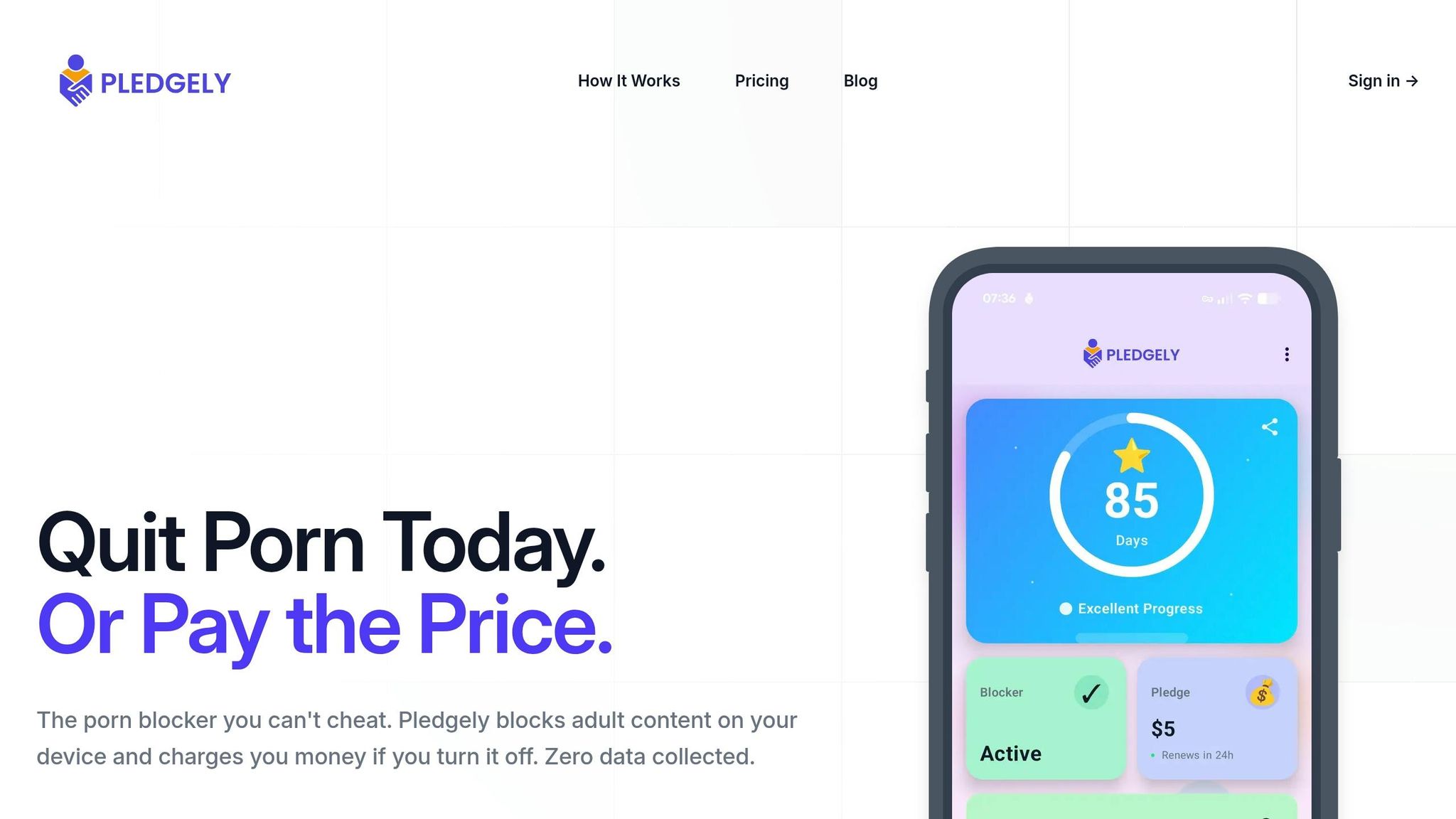
Digital tools like Pledgely can help you stay on track by adding an extra layer of accountability. This app combines local porn-blocking technology with a financial pledge system that charges you only if you disable the blocker. By turning your goals into tangible stakes, it helps strengthen your commitment.
Pledgely works across all browsers and apps on your device without storing your browsing data. Its standout feature is the financial accountability layer: you set a daily pledge (from $5 to $100), and the app charges that amount only if the blocker is turned off. This creates a moment of pause, giving you time to practice techniques like urge surfing instead of giving in to cravings.
For $9.99 per month, Pledgely offers 24/7 protection and works on multiple devices. The financial pledge isn't about punishment - it’s a way to help your future self stick to the decisions you make today.
To strengthen your defenses, consider combining Pledgely with other tools, such as device-level restrictions (like iOS Screen Time or Android Digital Wellbeing) and reducing exposure to triggering social media feeds [2]. The goal is to make unhealthy choices inconvenient, so healthier behaviors become the easiest path forward.
Books, Apps, and Other Recovery Resources
Recovery is easier when you have the right tools and knowledge. Understanding the science behind your experience can help you navigate tough moments - like the flatline phase - and stay motivated when progress feels slow.
Some must-read books include The Brain That Changes Itself by Norman Doidge, Supernormal Stimuli by Deirdre Barrett, and Pornified by Pamela Paul. These works explain how neuroplasticity works and how artificial stimuli can hijack your brain's reward system.
In addition to reading, connecting with support groups can make a big difference. Organizations like Sex Addicts Anonymous (SAA) and Porn Addicts Anonymous (PAA) provide spaces where you can share experiences and build accountability. Professional therapies, such as Cognitive Behavioral Therapy (CBT) and Dialectical Behavior Therapy (DBT), also offer evidence-based strategies to address underlying patterns. Recognizing addiction as "a primary, chronic disease of brain reward, motivation, memory and related circuitry" [9] reinforces the understanding that recovery is a process that takes time and effort.
Conclusion
Rewiring your brain after quitting porn takes time and persistence. Many people notice noticeable improvements around the 90-day mark, but full recovery can take anywhere from six months to two years, depending on your habits and history. It's important to remember that the process isn't a straight line. You'll likely face withdrawal symptoms and go through a "flatline" phase, which often involves low libido and emotional numbness.
Patience is key because your brain needs time to reset. As CT Dool, a men's coach, explains:
Stillness is the most productive thing we could do right now [3].
The flatline phase is a sign that your nervous system is recalibrating. Expecting quick results can be discouraging and might lead to setbacks. Instead, view this downtime as an opportunity for your brain to clear out old habits and lay the groundwork for new, healthier patterns. This recalibration is what makes long-term change possible.
Consistency is what transforms small, daily decisions into lasting progress. Each time you choose a quick stretch instead of scrolling or opt for a workout over giving in to cravings, you're strengthening the parts of your brain responsible for impulse control. Alongside these choices, digital accountability tools like Pledgely can play a big role in your recovery. By adding a financial pledge system that charges you if you disable the blocker, Pledgely creates a moment of pause, helping you manage impulses when they arise.
Pair Pledgely with other effective strategies: replace high-dopamine activities with exercise or learning something new, aim for 7–9 hours of sleep each night, and cut back on endless digital distractions like social media. These habits help rewire your brain's reward system and support long-term recovery.
While recovery isn't easy, it's absolutely achievable. Commit to small, consistent changes, use tools like Pledgely to stay on track, and give your brain the time it needs to heal and rebuild.
FAQs
How do I know if I’m making progress during the flatline?
Progress during the flatline often shows up in subtle but meaningful ways, like experiencing fewer cravings, feeling more emotionally balanced, or gaining better control over impulses. Although some withdrawal symptoms may linger, they typically ease as time goes on. Paying attention to emotional and behavioral changes - such as reduced mood swings or a stronger ability to bounce back from challenges - can be a helpful way to recognize that your brain is adjusting and recovering.
What should I do if cravings spike again after 90 days?
Cravings after 90 days are completely normal - they’re a sign that your brain is still in the process of rewiring itself. To handle these urges, try incorporating habit replacement techniques, such as swapping old triggers with positive activities, or practicing mindfulness exercises to stay grounded in the moment. You can also use digital accountability tools to track your progress and stay motivated.
Stick to your recovery plan, and don’t hesitate to lean on a support network, whether that’s a community group or a professional. It’s important to remember that setbacks can happen, and they don’t define your journey. Staying consistent and patient will help you move forward and regain control over time.
Do I need therapy or can lifestyle changes be enough?
Whether therapy is the right choice or lifestyle changes are enough depends on your personal circumstances. Many people find that quitting porn, paired with strategies like habit-replacement techniques and using digital accountability tools, can bring noticeable improvements within 3–6 months. However, if you're struggling with persistent urges or emotional difficulties, therapy could be a valuable option. It can help uncover deeper issues and offer support that's tailored specifically to your needs.