
7 Ways Porn Addiction Affects Your Mental Health
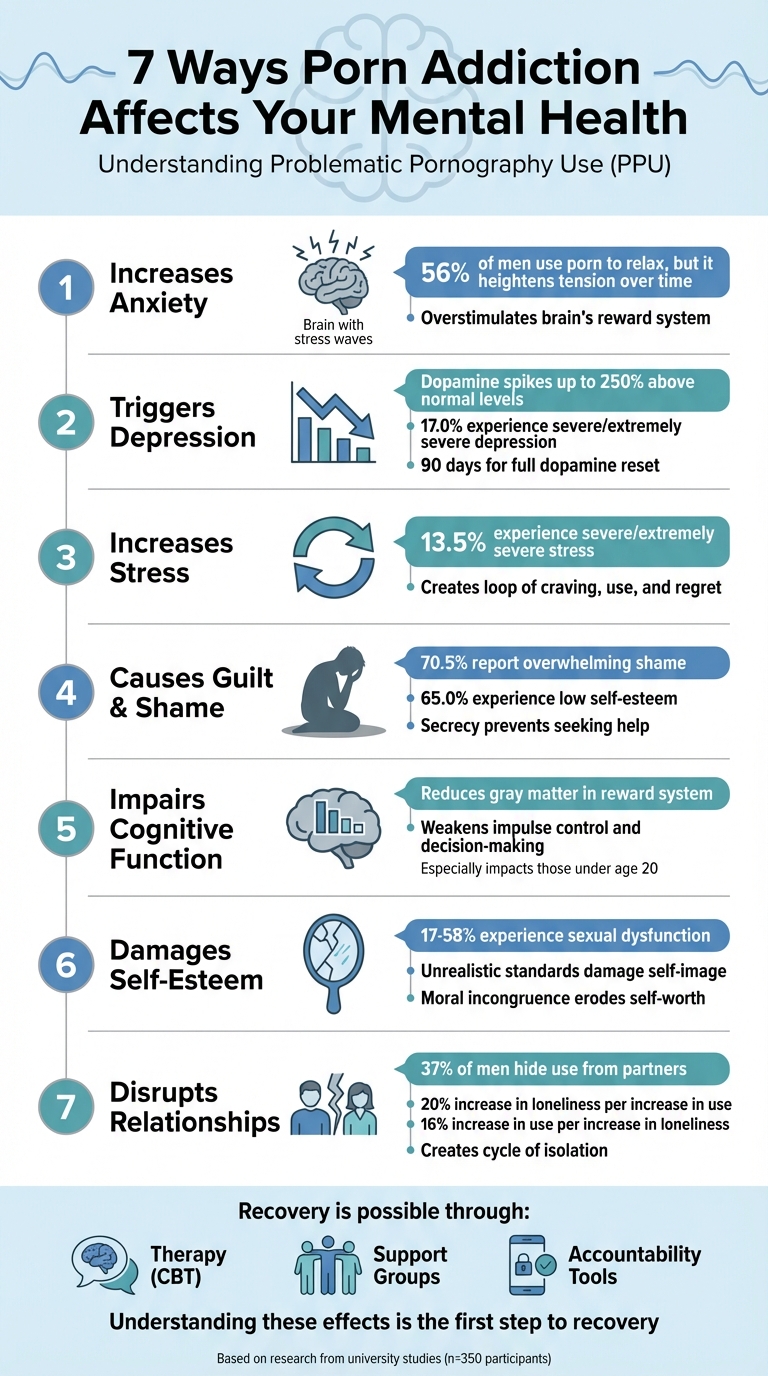
Porn addiction, also known as Problematic Pornography Use (PPU), can severely impact your mental health. It disrupts brain function, emotional stability, and relationships, creating a cycle that's tough to break. Here's how it affects you:
- Increases Anxiety: Overstimulates the brain, heightening tension and performance anxiety.
- Triggers Depression: Dopamine spikes lead to emotional numbness and loss of joy in daily life.
- Adds Stress: Creates a loop of craving and regret, worsening emotional distress.
- Causes Guilt and Shame: Fosters feelings of self-worthlessness, deepening the addiction cycle.
- Impairs Thinking: Weakens decision-making and focus due to changes in brain function.
- Hurts Self-Esteem: Unrealistic standards in porn damage self-image and confidence.
- Damages Relationships: Breaks trust, isolates users, and fosters loneliness.
Understanding these effects is the first step to recovery. Therapy, support groups, and accountability tools can help rebuild mental health and relationships.
How Porn Ruins Your Mental Health
1. Increases Anxiety Levels
Compulsive use of porn overstimulates the brain's reward system, throwing it off balance and leaving you feeling perpetually on edge [5].
Interestingly, while about 56% of men turn to porn as a way to relax, this relief is often short-lived. Instead of easing anxiety, it can heighten underlying tension over time [4][5].
Feelings of guilt and shame often arise when there's a clash between personal values and porn use, a phenomenon known as moral incongruence. This internal conflict can lead to chronic worry and emotional distress [4][5]. Additionally, relying heavily on online interactions can create a sense of detachment from real-life relationships, making authentic connections feel more intimidating and anxiety-provoking.
Another factor is the contrast between real-life intimacy and the heightened intensity of porn. When real-life experiences don’t measure up, the brain releases less dopamine, leading to what’s known as a negative prediction error. This can result in performance anxiety. As researchers Prause and Pfaus explain:
Erectile problems may occur when real-life sexual stimulation does not match the broad content [accessible online] [5].
This pattern is similar to substance addiction, where heightened sensitivity to triggers makes it harder to resist urges. Ultimately, these mechanisms contribute to increased anxiety and may pave the way for other mental health struggles [5].
2. Triggers Depression Symptoms
Porn addiction causes intense dopamine spikes - up to 250% above normal levels - which leave the brain in a deficit state afterward. This can result in feeling irritable, hopeless, and emotionally numb for days [6][7]. The way this cycle impacts brain chemistry is strikingly similar to patterns seen in clinical depression.
Over time, this constant overstimulation forces the brain to reduce its dopamine receptors. As a result, everyday activities that once brought joy - like exercising, spending time with loved ones, or pursuing hobbies - start to feel less rewarding. This loss of pleasure, known as anhedonia, is a hallmark of Major Depressive Disorder [6][2].
Patrick Devosse, the creator of the REBORN Method, vividly describes this experience:
Every session gave me 20 minutes of escape and 48 hours of darkness. I kept choosing the 20 minutes because I'd forgotten what light felt like [6].
Adding to the problem, the guilt and shame associated with porn use trigger a surge of cortisol, a stress hormone. This further suppresses dopamine production, deepening depressive symptoms [6]. Many people then turn back to porn as a way to numb emotional pain, creating a vicious cycle where self-soothing only worsens the depression [6].
Breaking this cycle is especially tough in the early stages of recovery. During the first two to four weeks of abstinence - often called the "withdrawal valley" - depressive symptoms can intensify as the brain begins to recalibrate. While this temporary dip is part of the healing process, a full dopamine reset typically takes around 90 days [6]. This biochemical struggle highlights why overcoming porn addiction is such a significant challenge for mental health.
3. Increases Stress and Emotional Distress
Porn addiction often traps individuals in a relentless cycle of craving, use, and regret. This isn’t just about occasional discomfort - it can lead to intense emotional distress. Research highlights that about 13.5% of university students struggling with compulsive pornography use experience severe or even extreme levels of stress [10]. What may start as a coping mechanism for relaxation quickly spirals into a pattern that worsens emotional well-being.
Initially, many turn to porn seeking temporary relief from stress. However, this behavior can evolve into a harmful habit. As SUD researcher Edmund Murphy points out, "As porn use increases, mental health issues increase, thereby worsening one another" [2]. Instead of easing stress, the cycle of use often amplifies it, creating a loop of dependency and emotional strain.
Withdrawal symptoms like agitation and irritability, coupled with a reduced ability to enjoy natural rewards, perpetuate this stress cycle [2]. Over time, activities that once brought joy lose their appeal, pushing individuals deeper into their reliance on porn. This often leads to what David P. Fernandez from Nottingham Trent University describes as "moral incongruence", where a person disapproves of their own porn use but continues the behavior anyway. This misalignment between actions and values exacerbates daily stress [8].
For younger individuals, particularly adolescents and young adults, the impact can be even more severe. Excessive porn use disrupts the development of impulse control and emotional regulation in the prefrontal cortex, a part of the brain that doesn’t fully mature until around age 20 [2]. This disruption can make it harder to manage stress and build emotional resilience over time.
Addressing these challenges requires targeted interventions. Cognitive Behavioral Therapy (CBT) can be particularly effective in helping people identify when they’re using porn as a way to avoid dealing with emotions. It also equips them with healthier coping strategies [9]. Additionally, support groups and mindfulness practices provide tools to manage emotions without resorting to compulsive behaviors [8]. These approaches can help break the cycle and reduce the emotional toll of addiction.
4. Causes Guilt and Shame
Expanding on the emotional struggles mentioned earlier, guilt and shame play a significant role in worsening mental health. Guilt stems from feeling like you've made a mistake, while shame goes deeper, making you believe there's something fundamentally wrong with you. Both emotions often fuel the cycle of addiction.
In a survey involving 350 people struggling with compulsive pornography use, 70.5% reported experiencing overwhelming shame, and 65.0% noted low self-esteem [13]. Counselor Gary Hominick explains this dynamic:
Shame attacks self-worth, convincing men they are undeserving of love or redemption, which increases the urge to escape again through unhealthy sexual behavior [11].
This creates a painful loop: while pornography may offer brief relief, it ultimately deepens feelings of guilt and shame. Licensed Clinical Professional Counselor Scott Stolarick describes it like this:
The addict is vigorously chasing this elevated mood, but the behavior of engaging in the addiction is often followed by intense feelings of guilt and shame [12].
The secrecy surrounding such behavior only adds to the emotional weight. As Robert Weiss, PhD, LCSW, points out, this secrecy often prevents individuals from seeking the help they need [13].
Breaking this cycle starts with addressing shame in a supportive environment. By learning to separate self-worth from actions, individuals can open the door to more effective recovery strategies.
5. Impairs Cognitive Function and Decision-Making
Porn addiction takes a toll on cognitive clarity and decision-making. The prefrontal cortex - essentially the brain's decision-making hub - becomes compromised by a condition called hypofrontality, which makes delaying gratification much harder. Natalie Buchwald, LMHC from Manhattan Mental Health Counseling, explains:
Normally, these brain areas help you resist instant gratification in favor of long-term rewards - but with addiction, pornography is perceived as incredibly valuable, worth pursuing at almost any cost [7].
This shift in brain function weakens impulse control, paving the way for further cognitive challenges.
A 2015 brain scan study found that heavy pornography use reduces gray matter in critical areas of the brain's reward system. It also disrupts the connection between the decision-making center and motivational circuits [3]. Danielle Sukenik, Assistant Professor of Psychiatry at the University of Colorado Anschutz Medical Campus, highlights how these changes amplify cravings and impulsivity [3].
Memory and focus also take a hit. The constant dopamine spikes from excessive porn consumption create an "attentional bias", where the brain becomes overly tuned to sexual cues. This can lead to struggles with concentration, forgetting important details, or making impulsive choices that conflict with personal values. Everyday tasks and responsibilities often fall by the wayside as a result.
Adolescents are particularly at risk. Since the prefrontal cortex doesn't fully mature until around age 20, early exposure to pornography can have lasting effects on decision-making skills. Edmund Murphy, a medical writer for NCADD, warns that such early exposure can damage "a person's problem-solving and decision-making skills" permanently [2]. This decline can result in neglected responsibilities, financial troubles, and a pattern of impulsivity that overrides reasoned decision-making.
Overcoming these challenges often requires targeted interventions like cognitive behavioral therapy (CBT) and mindfulness practices. The cognitive impairments caused by porn addiction can also spill over into other areas, affecting self-esteem and relationships in profound ways.
6. Damages Self-Esteem and Self-Image
Porn addiction doesn't just take a toll on emotional health - it also warps how you see yourself. It creates a damaging cycle that undermines self-perception, leaving you feeling inherently flawed and affecting every corner of your life.
One key issue is the clash between your personal values and your actions, often referred to as moral incongruence. This internal conflict can chip away at self-worth. As Robert Weiss, PhD, LCSW, puts it:
If an individual was raised in a home or a religion or a culture that frowns upon porn use, that person can't help but feel defective and less than for using it [13].
On top of that, pornography often showcases digitally altered bodies and staged scenarios, setting up unrealistic standards of beauty and intimacy. These portrayals can lead to dissatisfaction with your own body and even self-loathing. Studies have found that this dissatisfaction has driven some individuals to consider cosmetic surgery in an attempt to match these unattainable ideals [1].
For men dealing with compulsive pornography use, sexual dysfunction is another harsh reality. Research indicates that 17% to 58% of these individuals experience issues in this area, which can cause profound embarrassment and reinforce feelings of inadequacy [13]. Adding to the struggle, many choose to hide their addiction, which isolates them further and makes it even harder to rebuild a healthy sense of self.
These self-image struggles only deepen the mental health challenges that come with porn addiction, creating a cycle that's difficult to break.
7. Disrupts Relationships and Leads to Isolation
Porn addiction often thrives in secrecy, creating a wedge between you and your loved ones while quickly eroding trust. Studies reveal that 37% of men in committed relationships hide their pornography use from their partners [15]. This secrecy isn’t just about hiding behavior - it’s what experts call an "attachment threat", undermining the sense of safety and security essential in a healthy relationship. Researcher Edmund Murphy explains it plainly: "Partners may feel that the use of porn is infidelity or betrayal, causing a decline in trust" [2]. In fact, nearly one-third of engaged and married women view pornography use as a form of marital infidelity [15]. This breach of trust doesn’t just strain relationships - it fosters emotional disconnection and sets the stage for profound loneliness.
As the emotional gap widens, screen time often takes priority over genuine connection. Your partner might feel neglected, disrespected, or even unwanted as your focus shifts elsewhere [2]. Mark H. Butler, a professor at Brigham Young University’s School of Family Life, describes this painful dynamic: "The user can't escape the fact that when the experience is over, they're still alone in an empty room. So, when sexual intoxication wears off, the experience may only end up revealing a deeper loneliness that fuels the cycle" [14].
This creates a vicious cycle. Research shows that every increase in pornography use predicts a 20% rise in loneliness, while heightened loneliness, in turn, drives a 16% increase in pornography use [14]. As you retreat further, social obligations are missed, family events are avoided, and meaningful conversations become rare. Meanwhile, the shame of hiding your behavior makes reaching out for help feel impossible. The result? A growing sense of isolation that pulls you deeper into the addiction, making recovery seem out of reach without external support.
Conclusion
Porn addiction is more than just excessive screen time - it can deeply influence your thoughts, emotions, and relationships. Research on university students found that compulsive pornography use was tied to severe or extremely severe levels of depression (17.0%), anxiety (20.4%), and stress (13.5%). Beyond these mental health impacts, it often leads to cognitive struggles, emotional turmoil, and social withdrawal [10].
The good news? Recognizing the problem is the first step toward change. Understanding how porn addiction contributes to stress, anxiety, and depression can inspire you to confront the root causes and seek recovery [2][1].
Recovery is rarely a solo journey. Tools like Cognitive Behavioral Therapy (CBT) can help reshape harmful thought patterns, while support groups provide a safe space to share experiences and break free from the cycle of shame [2]. Studies also highlight the importance of factors like personal values, faith, and motivation in reducing pornography use [10]. For additional support, accountability tools like Pledgely offer practical solutions. By combining content blocking with financial accountability - charging you only if you disable the blocker - it helps you stay on track without compromising your privacy.
Taking action today can lead to a healthier, more fulfilling life. Whether through therapy, community support, or accountability tools, investing in your mental well-being and relationships is always worth it.
FAQs
How do I know if my porn use is an addiction?
If you find yourself spending increasing amounts of time on pornography despite harmful consequences, neglecting responsibilities, or taking risky actions, these could be signs of a porn addiction. Other red flags might include hiding your activity, frequently deleting your browsing history, creating emotional distance in relationships, or acting secretively. Identifying these behaviors early can be a crucial step toward seeking help and addressing the problem before it escalates.
How long do withdrawal symptoms usually last?
Withdrawal symptoms from porn addiction can last anywhere from a few days to several weeks. For some individuals, these symptoms might even extend beyond a month, depending on factors like the intensity of the addiction and personal circumstances. Things like emotional strength and habitual behaviors play a big role in how long the process takes.
Can porn addiction be treated without telling anyone?
Yes, it’s possible to address porn addiction privately if that’s what you’re most comfortable with. Options like therapy or online support groups provide a confidential way to seek help without sharing your situation publicly. While working with a professional is often the best route, some people also choose to confide in trusted friends or family members for additional support. The approach can be customized to fit your needs, and seeking help privately is both common and completely valid.